THE SKIN
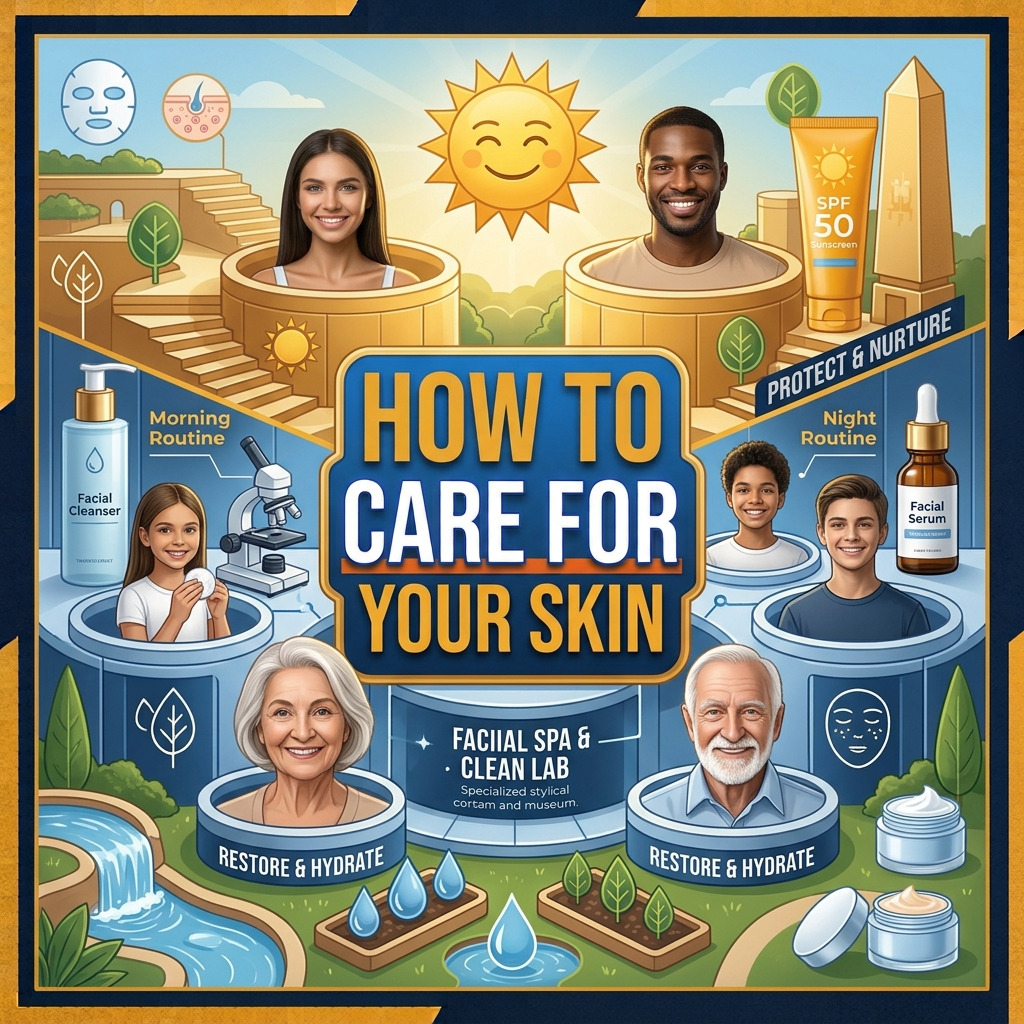
The skin is the outer covering of the body. It is the largest organ of the body and it covers a large area of the body. The skin is attached to the underlying tissues by elastic fibers.
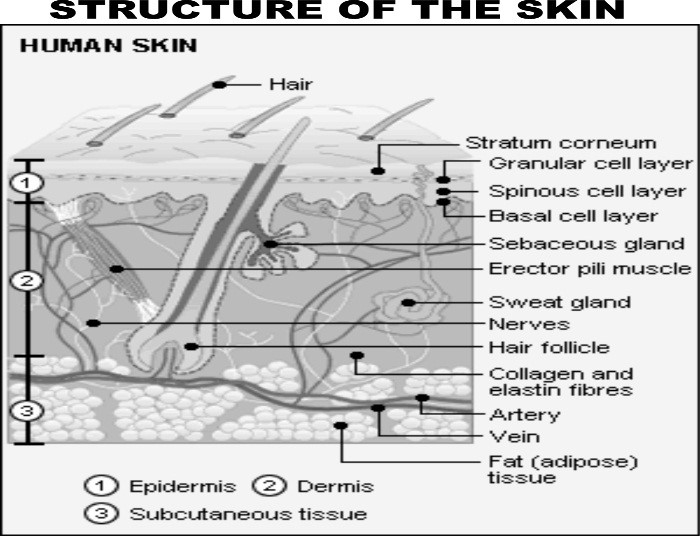
The skin is made up of two major layers.
- The epidermis
- The dermis
The Epidermis: is the outer layer. It is covered by a thin layer of keratin. It is also covered with hairs and tiny holes called sweat pores.
The Dermis: is the inner layer of the skin. It consists of the following
- Sweat glands
- Oil glands
- Blood vessels and nerves
- Fat deposits which reduce heat loss from the body.
FUNCTIONS OF THE SKIN
- It protects the body from bacterial infections, poor weather and injury.
- It is one of the excretory organs e.g. perspiration (sweat)
- It helps in the regulation of the body temperature
- The skin protects the more delicate internal organs
- It helps to manufacture vitamin D in sunlight
- It acts as a sensory organ of touch, pain, heat and cold
- It provides the brain with a continuous flow of information about the body’s surroundings
TYPES OF SKIN
- Normal skin: is soft, clear, smooth and without spots or blemish
- Dry skin: is usually thin, sensitive and wrinkles easily
- Oily skin: is greasy and occurs when the oil gland produces too much oil
- Combination of dry and oily skin: this has some part of the skin oily while other parts are dry.
GENERAL CARE OF THE SKIN
Good care of the skin adds beauty and glow to our appearance
- Bath regularly and frequently to avoid blockage of the pores
- Use good toilet soap and quality skin oil or cream
- Avoid the use of bleaching cream on your skin
- Do not use other peoples towel or clothing
- Eat balance diet i.e. foods rich in vitamin and all the classes of food e.g. fruits, vegetables, milk, cod liver oil etc.
- Do not expose your body to too much heat
- Treat skin diseases promptly
- Always have a bath after serious or rigorous exercise\game to avoid body odour
- Do exercises to keep the body warm and aid the easy flow of blood
- Keep your towel, underwear and other clothes clean
SKIN INFECTIONS
When the skin is neglected, skin diseases may occur. Examples are;
- Eczema: causes the skin to become inflamed and gives an itching sensation. It leaves a different colour from the colour of the skin
Treatment – see a Doctor
- Scabies: is caused by a small parasite animal which bores holes under the outer skin. It causes severe itching. It can easily be transmitted from one person to another by direct or personal contact or by handling an infected person’s clothing
Treatment – see a Doctor
- Pimples: They are small raised inflamed spots on the skin, commonly found on the face
Treatment – use mild medicated soap. In serious cases, see a Doctor
- Ringworm: this is caused by the growth of fungi between the inner and outer layers of the skin surrounded by a ring of small round spots
Treatment – shave off the hair or see a doctor
MINOR SKIN INJURIES
They need immediate treatment. When neglected, they could result into serious infections.
- Cuts
A cut usually lies open. It may be caused by sharp objects like knives, broken bottles, razor blades and glasses.
- Bruises
These occur when the body is given a blow with sufficient force. There is bleeding under the skin without breaking it. Swelling and de-coloration or the injured area occurs.
- Burns
It is cause by dry heat and contact with flame or hot metal e.g. pressing iron, hot plate.
- Scalds
It is caused by moist heat e.g. hot fat or steam or boiling liquid on the skin
- Stings
They are bites from insects such as the bee, scorpion, often the sting may sometimes remain in the skin and should be removed immediately
- Shock
This occurs as a result of a sudden, heavy impact from electricity on an individual. This can cause serious damage, so care is greatly needed.
TREATMENT OF SKIN INJURIES
Treat any of them immediately then go to the nearest hospital to see the doctor for more treatment.
EFFECTS OF BLEACHING CREAM ON THE SKIN
Bleaching the skin is the process of applying specially prepared chemicals to remove the dark pigment on the outer skin. The result is a fair or lighter skin. This practice has the following effects;
- Bleached skins are very difficult to heal if injured
- Bleached skins lose their natural beauty and look unhealthy
- Bleaching produces patches of dark and light skin
- It might result in skin problems later in life.